Black academic icon Fred Moten has long since deleted his Twitter account, so you’re going to just have to believe me when I tell you that he once tweeted about the NFL Combine and likened it to… shall we say, an audition for auction in front of 19th-century plantation owners. He was being provocative and facetious, but there’s a grain of truth to that sentiment.
Regardless of what we as fans hear about how various draft prospects come across in interviews with various teams, the version of the Combine that’s put on TV and the version of it that gets talked about and dissected by media in the weeks between the Combine and the Draft is a purely physical affair. Players are judged for their value entirely based on their athletic prowess, which is to say, as bodies rather than as people.
In a profession that’s founded in athleticism, a degree of that is inevitable, and not even necessarily a bad thing. But if you spend more than a minute thinking about it, particularly with the racial politics that Moten once noted, I think you’re bound to be a little uncomfortable.
So, speaking broadly, I want to see it as cool and good when a player takes some agency in the process and tries to go through it on their own terms, working out at their pace and only doing the workouts and drills they believe will benefit them. Maybe the most prominent example for me is Lamar Jackson.
As an exciting dual-threat quarterback, Jackson would likely have at least challenged Robert Griffin III as the fastest quarterback prospect since Michael Vick. But he didn’t run the 40-yard dash or any of the speed/agility tests, neither at the 2018 NFL Combine nor at his Pro Day. Apparently, after a scout from the Los Angeles Chargers asked him about working out as a wide receiver, echoing an ill-founded (and more than a little racist) sentiment that was prevalent, if not ubiquitous, on the internet, he decided that he would not give teams data that would let them compare him athletically to other wide receiver prospects.
But at least he threw at the NFL Combine. Top quarterbacks not throwing at the Combine has been a thing for much longer than any recent conversation about opting out of workouts, or the parallel discussions that NBA fans and media are having about “load management.”
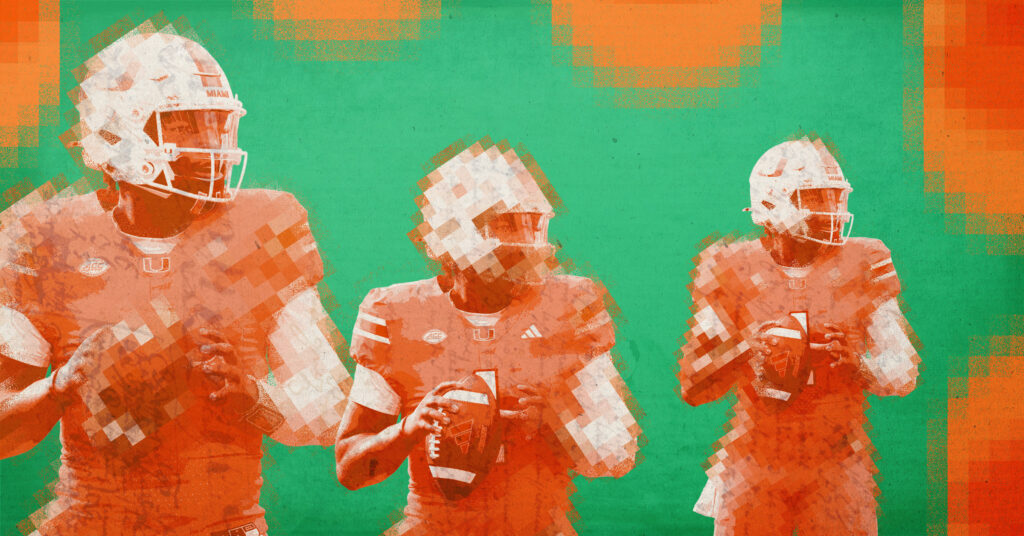
All the way back starting in 2009, the top quarterback drafted in 8 of the last 16 drafts has chosen not to throw at their Combine, and that number is all but certain to move up by one if and when Cam Ward or Shedeur Sanders is the first quarterback off the board this year. That doesn’t include plenty of other first-round quarterbacks who opted out.
These quarterbacks usually throw at their Pro Days instead, where they have familiar targets, familiar surroundings, and a script they can practice and control — Drake Maye wouldn’t have been able to take mulligans on his missed throws at the NFL Combine the way he did at his Pro Day, for example.
Quarterbacks, in other words, have long been wise to the idea that throwing at the Combine can hurt them more than it can help them, and it appears that other highly-touted prospects are following suit. In our latest mock draft, the top four projected picks (including two quarterbacks) simply did not work out at the Combine. Even after their Pro Days, just 3 of the projected top 10 have athleticism data at all, and even for them it’s incomplete.
In fact, out of all players the industry expects to be taken in the first two rounds, just two — Alabama guard Tyler Booker and Iowa State receiver Jaylin Noel — have numbers for every Combine drill. More players than that participated in position drills, but even though you could argue those are the more relevant activities for scouting football players, they’re not how we, the fans, consume the Combine, and so they get forgotten much more quickly than the numbers.
That’s at the crux of my thinking — the Combine is a spectator event more so than it is a scouting one. NFL teams are scouting prospects through stuff that mostly does not face the public: film angles we don’t see from their played games, private workouts, testimonials from coaches, the list probably goes on.
If there is a point to the Combine, it is in giving fans just a little bit of access to the pre-draft process. Like the sport itself, it gains value from the fact that it is seen and cared about. Players should not feel like they owe the common fan anything, particularly as so many of them spend days upon days fielding abuse from fans about performances, outcomes, and missed parlays.
They definitely shouldn’t feel like they owe their prospective teams anything before they’ve been drafted and paid; the example of Lamar Jackson again rings true here. If he had shown loyalty to not-his-team rather than betting on himself, he’s not a two-time MVP.
And yet, I can’t help thinking that we as fans are owed something by, if not the players, than the sport itself. Rules changes are made every year with viewing excitement among the factors considered. The NFL Combine is a lot of things, and one of those things is these future NFL players’ first time on NFL television.
The NFL, by and large, does not have the problems that the NBA does with its competitors only selectively choosing to compete. Seasons are too short and injury is too unavoidable in football for any kind of load management: any attempt to do so ends with what happened to the Pro Bowl over the last several seasons. Right now, players, especially the draft’s top players, appear to be looking at the Combine purely as a job interview over which they don’t have a lot of control: a situation in which anybody would try to hurt themselves as little as possible.
But just like traditional job interviews can’t actually tell you a ton about your potential employees, this is an approach that neuters a genuinely exciting event from all angles. Perhaps, if we shifted to thinking about the NFL Combine as a pro football event and its participants as pros, not future pros, it could regain some of that excitement, import, and respect.